CAN A TOOTH BE REPLACED? Bridge/Implants/Dentures – Dentist Brampton

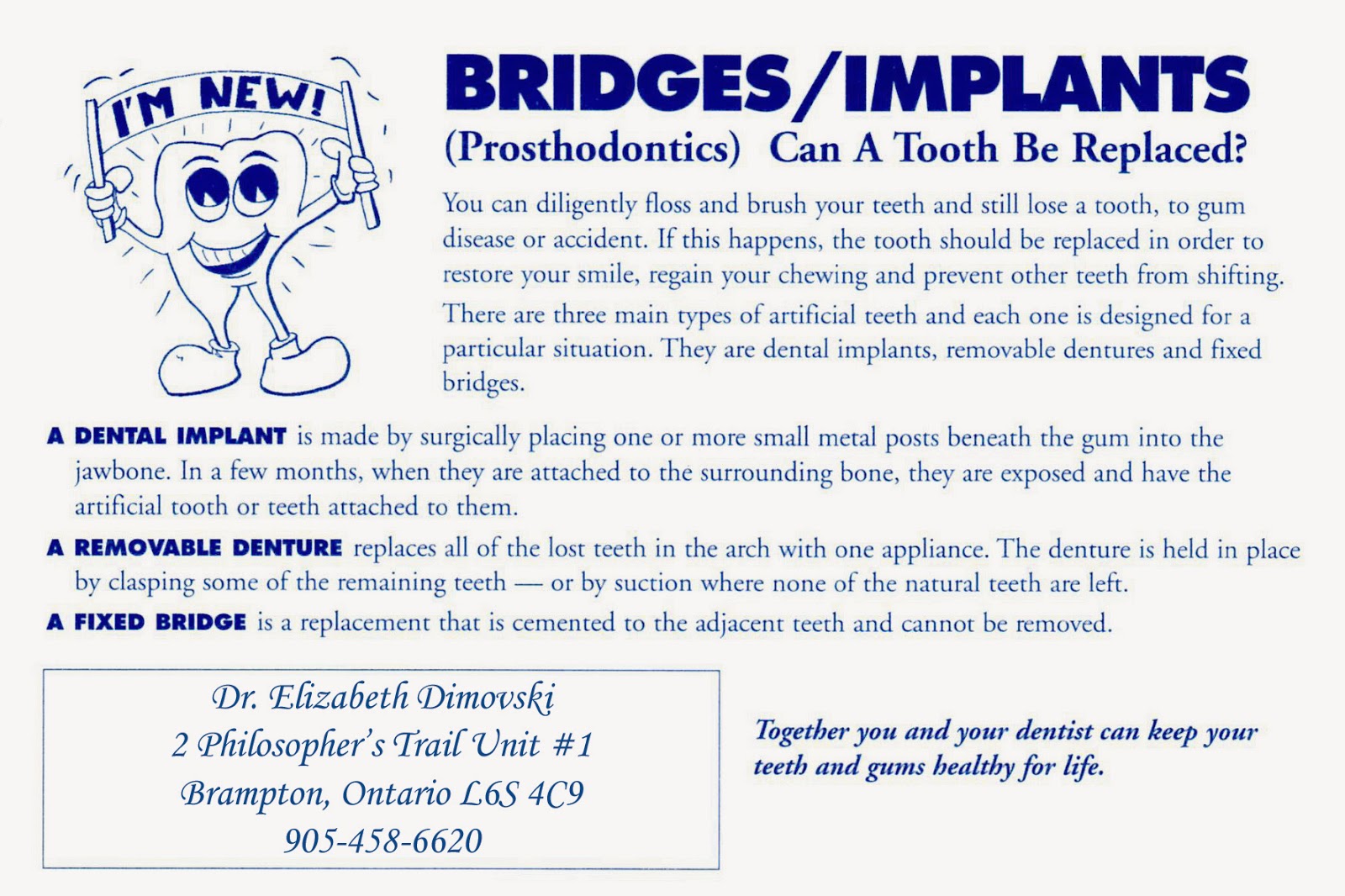
Bridge/Implants/Dentures (Prosthodontics)

Can A Tooth Be Replaced?

You can diligently floss and brush your teeth and still lose a tooth, to gum disease or accident. If this happens, the tooth should be replaced in order to restore your smile, regain your chewing and prevent other teeth from shifting. There are three main types of artificial teeth and each one is designed for a particular situation. They are dental implants, removable dentures and fixed bridges.

A DENTAL IMPLANT is made by surgically placing one or more small metal posts beneath the gum into the jawbone. In a few months, when they are attached to the surrounding bone, they are exposed and have the artificial tooth or teeth attached to them.

A REMOVABLE DENTURE replaces all of the lost teeth in the arch with one appliance. The denture is held in place by clasping some of the remaining teeth or by suction where none of the natural teeth are left.

A FIXED BRIDGE is a replacement that is cemented to the adjacent teeth and cannot be removed.

For more information on these or other topics be sure to contact one of our dental professionals.
Dr. Elizabeth Dimovski and Associates
Dentists in Brampton Ontario
905-458-6620


HELPING YOUR CHILD WITH THEIR DENTAL VISIT – DENTIST BRAMPTON

Daniella SAYS!

Dental Anxiety, Dentist, Brampton, Brampton Dentists, Childs First Dental Visit, Dental Cleanings,

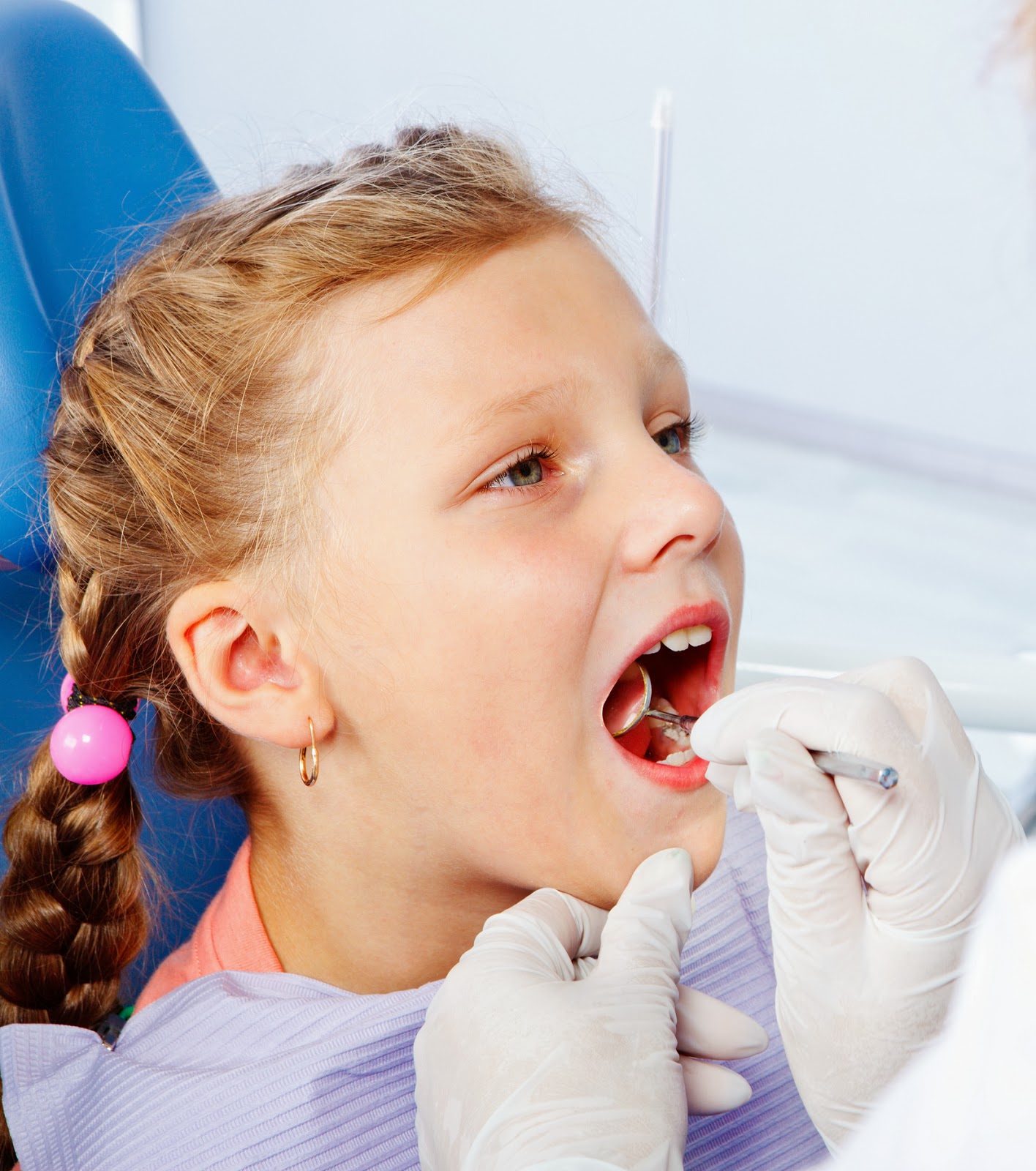
To help the dental visit go more smoothly:

1. Tell your child about the visit but limit the amount of details given.

2. Answer any questions with simple, to-the-point, answers. Let the dentist answer more complex or detailed questions as dentists are trained to describe things to children in a non-threatening and easy-to-understand language.

3. Be careful of the words that you use such as “hurt” and “pain.”

4. Be sure not to tell your child about an unpleasant dental experience that you’ve had.

5. Explain things in a matter that they’ll understand how important it is to maintain healthy teeth and gums and that the dentist is a friendly doctor whose job it is to help do this.

6. Don’t promise a reward for going to the dentist.

Ways a dentist can calm an anxious child:

1. Voice control. The dentist uses a friendly voice, which could become firmer if necessary.

2. Simple instructions. The dentist will use simple words (tell, show, do) to explain a procedure and may demonstrate the procedure on a doll or another person before performing the procedure on the child.

3. Positive reinforcement. The dentist will use praise and compliments to reward for good behaviour.

4. Distraction. The dentist will tell stories or engage the child in conversation to draw the child’s attention away from the work being completed.

5. Nonverbal communication. The dentist uses body language, such as a simple smile to reinforce positive behaviour.

6. Sedation. The dentist may use sedation to help the child relax and be more comfortable, if necessary. The two most common types of sedation that might be used in children are nitrous oxide (“laughing gas”) or an oral sedative (such as Valium).

For more information on this or other topics be sure to contact one of our dental professionals.
Brampton Dentists
905-458-6620

Dental Programs For Children in Need of Dental Treatment – Dentist Brampton

Mira SAYS!

CINOT, Best Dentist in Brampton, Healthy Smiles, Dental Programs For Children Ontario, Brampton Family Dentist, Children in Need Of Treatment,
Did you know that good oral health is very important for a child’s overall health, however, for some, dental treatment is not affordable? Ontario offers two dental programs for children 17 and under that do not have access to dental coverage. If eligible, children are covered under these programs at no cost. The two programs are Healthy Smiles and CINOT (Children In Need Of Treatment).
 
If you know a child under the age of 17 that may be in need of dental treatment be sure to contact the local Public Health Unit in your area for more information. You may also contact our dental professionals for more information.
Dr. Elizabeth Dimovski Dental Office 
905-458-6620

INFORMATION ON GUM DISEASE

Bad Breath, Best Dentist in Brampton, Dentist Brampton, Dentist, Brampton, Brampton Dental offices, Gum Disease, Swollen Gums, Brampton Family Dentist,
Gum disease is an inflammatory condition that affects the soft tissue and bone around the teeth. Although it might have minimal or no symptoms, this disease is considered a serious health condition that may lead to tooth loss.
The best way to reduce your chances of having gum disease is to visit your dentist regularly for check-ups and cleanings.
Some common warning signals of gum disease include:
Bleeding gums when brushing
Redness and swollen gums
Loose and/or separating teeth
Bad breath
Receding gums that make the teeth look longer
Change in your bite
Dentures that do not fit anymore
For more information or if you think you might be at risk of gum disease contact our office or be sure to ask one of our dental professionals at your next dental visit.
Dr. Elizabeth Dimovski and Associates – We Protect Your Smile!
905-458-6620

BRINGING AWARENESS TO ABUSE OF OLDER ADULTS

Jessica SAYS!
 
Definition – “A single or repeated act, or lack of appropriate action, occurring within any relationship of trust, that causes harm or distress to an older person.”
Elder abuse has become a domestic concern in Canada and the United States. People in the older populations are maintaining their dentition and seek care in dentistry. The dental practitioner is in a unique position to be aware of the obvious and subtle evidence of elder abuse. Two thirds of injuries sustained in abuse of older adults can be easily found during a routine oral examination. Over half of these injuries occur in the head and neck region. By 2026 every 5th Canadian will be older than 65 years. Elder abuse is complex and multiple factors may contribute. Some causes may include; Lack of understanding of needs and abilities. Discriminatory beliefs, including Ageism. Continuance of pre-existing abuse. A clear power and control imbalance.
 
Types of abuse include (and may also be criminal code offences); Physical, sexual, psychological, financial, neglect, violation of rights. Possible indicators may include; fear/ depression, visible cuts, scratches, bruises, swelling, burns, disclosure, difficulty walking/ standing, decrease in self-esteem, unable to meet expenses, suspicious looking signatures on cheques, a person showing unusual interest in the older adult’s financial affairs, malnourishment, missing dentures, glasses or hearing aides. Risk factors for being abused; Living alone; being socially isolated; having dementia. Older adults may not be able to communicate their abuse.
 
There is support for older adults facing abuse. Click on the link below for contact numbers and information. 

For more information feel free to contact our office.
 
Dr Elizabeth Dimovski Dental
905-458-6620