Is periodontal/gum disease contagious?

Brampton Dentist, Dentist near me, Dental Office in Brampton, Best dentist in Brampton,

Research has shown that periodontal/gum disease is caused by the inflammatory reaction to bacteria under the gums, so periodontal disease technically may not be contagious. However, the bacteria that cause the inflammatory reaction can be spread through saliva. This means that if one of your family members has periodontal disease, it’s a good idea to avoid contact with their saliva by not sharing eating utensils or oral health equipment. If you notice that your spouse or a family member has the warning signs of a possible periodontal problem (bleeding, red and swollen gums, or bad breath) you may want to suggest that they see a dentist or periodontist for an exam. It may help to protect the oral health of everyone in the family. (APP)

Dr. Elizabeth Dimovski and Associates

Brampton Dentists, Periodontist and Gum Specialist – 905-458-6620

Do you have a white line on the inside of your cheek?

Although it may scare some when they first see it, a white line inside the cheek, called Oral Lichen Planus, is a temporary condition that may last up to 10 years. It most often affects adults between the age of 30 and 60, more common in women and is not contagious.

Oral Lichen Planus comes from the lace-like pattern of fine white lines that appear on the inside of the cheeks, gums, and tongue, usually not requiring treatment. It is asymptomatic, and does not hurt.

As the exact cause of Oral Lichen Planus not know, research suggests that the immune cells, which normally protect us by destroying bacteria or viruses, start attacking the skin or the lining of the mouth.

While there is no “cure” for Lichen Planus, it is a manageable condition. If you think you might suffer from Lichen Planus, you should talk with your dentist or doctor. They can determine what treatment (if any) is needed.

Dental Offices in Brampton, Brampton Dentists, Dentists in Brampton, Dentist near me,

For more information visit ADA.

Dr. Elizabeth Dimovski and Associates – We Protect Your Smile!

Dentists in Brampton

905-458-6620

Dental Programs For Children in Need of Dental Treatment Healthy Smiles – Dentists Brampton

Dental Office in Brampton, Brampton Dentists, Best Dentist in Brampton, Caledon Dentists,

Did you know that good oral health is very important for a child’s overall health, however, for some, dental treatment is not affordable? Ontario offers a dental program for children 17 and under that do not have access to dental coverage. If eligible, children are covered under this program at no cost. For more information call your local Public Health Unit and ask about the Healthy Smiles program.

If you know a child under the age of 17 that may be in need of dental treatment be sure to contact the local Public Health Unit in your area for more information. You may also contact our dental professionals for more information.

Dr. Elizabeth Dimovski Dental Office  – We Protect Your Smile!
905-458-6620

*How to spot trouble. A guide to common dental problems*

How to spot trouble Here is a quick guide to common dental problems. You should visit your dentist if you have these warning signs.

Warning Sign The Problem?
Bad breath that doesn’t go away The cause might be gum disease, food, drinking, smoking, medicine you are taking or a health condition. If you cannot get rid of bad breath with daily brushing and flossing, see your dentist.
Your gums bleed when you brush or floss If you just started to floss, a little bleeding is normal. But if you bleed almost every time you brush or floss your teeth, see your dentist.
Dry Mouth For women, menopause may be the cause. It is also a side effect of many common medicines. It does not feel good and it can make dental problems worse. You need to tell your dentist if you have this problem.
A tooth that is a little bit loose A loose tooth could be caused by gum disease or by a blow to the mouth. In any case, it is a serious problem. You should see your dentist.
A sore mouth A sore mouth might be caused by false teeth that don’t fit well. It could also be from leaving false teeth in overnight. “Burning mouth syndrome” is a problem that affects some older women. Not eating the right kind of food may also be the cause.
Bleeding that you can’t explainMouth sores that don’t heal in 7 to 10 days

White or red patches in your mouth

Feeling numb or sore inside your mouth

These symptoms may be signs of oral cancer. See your dentist right away.
Teeth that are sensitive to:

    • Hot
  • Cold
  • Sweetness
  • Pressure
Teeth can become sensitive all of a sudden, or it can happen over time. In most cases, this kind of pain means something is wrong. Check with your dentist

Brampton Dentists, Top Dentist in Brampton, Dental Offices, Kids Dentists Brampton, Dental Info, Dental Facts,

For more information visit the Canadian Dental Association!

Dr. Elizabeth Dimovski & Associates – We Protect Your Smile!

Brampton Dentists www.drelizabethdimovski.ca

905-458-6620

Preventing Baby Bottle Tooth Decay Brampton Dentists

Brampton Dentists, Dental offices in Brampton, Top Dentists in Brampton,

  • Try not to share saliva with the baby through common use of feeding spoons or licking pacifiers. After each feeding, wipe your child’s gums with a clean, damp gauze pad or washcloth.
  • When your child’s teeth come in, brush them gently with a child-size toothbrush and a smear (or grain of rice sized amount) of fluoride toothpaste until the age of 3.
  • Brush the teeth with a pea-sized amount of fluoride toothpaste from the ages of 3 to 6.
  • Supervise brushing until your child can be counted on to spit and not swallow toothpaste—usually not before he or she is 6 or 7.
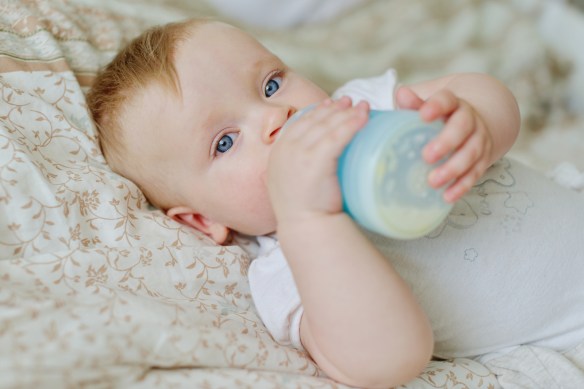
  • Place only formula, milk or breast milk in bottles. Avoid filling the bottle with liquids such as sugar water, juice or soft drinks.
  • Infants should finish their bedtime and naptime bottles before going to bed.
  • If your child uses a pacifier, provide one that is clean—don’t dip it in sugar or honey.
  • Encourage your child to drink from a cup by his/her first birthday.
  • Encourage healthy eating habits.

When your child’s first tooth appears, talk to your dentist about scheduling the first dental visit. Treat the first dental visit as you would a well-baby checkup with the child’s physician. Remember: starting early is the key to a lifetime of good dental health. (ADA)

Dr. Elizabeth Dimovski and Associates – Brampton Family Dentist

We Protect Your Smile!

905-458-6620